When your front door opens straight into the living room, everyday things tend to land wherever there is space. Shoes collect beside the sofa. A bag ends up on a dining chair. Keys disappear just when you need to leave.
You do not need a separate hallway to change that. A useful entryway can be one small patch of wall, the end of an existing cabinet, or a bench that gives shoes somewhere to live.
These small entryway ideas focus on making arrivals and departures easier without turning the entrance into another crowded corner. Choose the arrangement that suits your layout; there is no need to fit every idea into the same space.
Before you begin: protect the route through the room
Start by opening the front door fully and walking in with a grocery bag in each hand. Notice where you turn, where the door swings, and where someone else would need to pass.
That route matters more than an attractive console table. Furniture, hanging coats and baskets should not obstruct the door, its handle or the way into the room.
Use painter’s tape to mark the footprint of a possible bench or table on the floor. Leave it there while you go about a normal day. If you repeatedly step around the outline, a wall-mounted solution is probably a better fit.
Then decide what actually needs to stay by the door. For many homes, that is just keys, one everyday bag, the jackets currently in use and a few pairs of shoes. Spare footwear and seasonal coats can live elsewhere.
1. Give keys and mail one small landing spot
The simplest entryway starts with a reliable place to empty your hands. It could be a shallow wall shelf, a small tray on a nearby cabinet, or one end of a sideboard you already own.
Choose the spot you naturally reach after closing the door. If the tray is across the room, keys will probably continue to land on the nearest chair.
A bowl or divided tray is enough for keys and sunglasses. Give incoming mail a separate upright holder or a small basket so envelopes do not gradually take over the whole surface.
Make it work: keep the everyday landing area mostly clear. One attractive object can make it feel intentional, but a collection of candles, books and vases leaves nowhere for the things you actually carry home.
If there is room for a narrow table, check its depth rather than judging it only by its width. Also allow space for any drawer to open. A shallow surface that you can use comfortably is more helpful than a larger piece you have to squeeze past.
2. Move everyday bags and jackets onto the wall
Wall hooks are useful when there is almost no floor space to spare. A short row beside the entrance gives bags and coats a destination without adding the footprint of a standing coat rack.
Think about the space the items will occupy, not just the hooks. A winter coat or full backpack projects much farther into the room than an empty peg. Keep the hanging area out of the door swing and away from a narrow passage.
For a compact option, the ++Umbra Flip five-hook coat rack in Walnut/Black on Amazon (paid link)++ has hooks that fold back when not in use. That makes the empty rail visually tidy, although the coats themselves still need room.
Follow the mounting instructions and choose fixings appropriate for the wall and the intended load. In a rental, check what your lease allows before drilling. Removable hooks are an alternative for lighter items only when the surface and weight are suitable for that particular product.
Keep it manageable: reserve the entrance hooks for the bags and jackets in regular use. When they become overflow storage for the whole household, even a lovely rail starts to look cluttered.
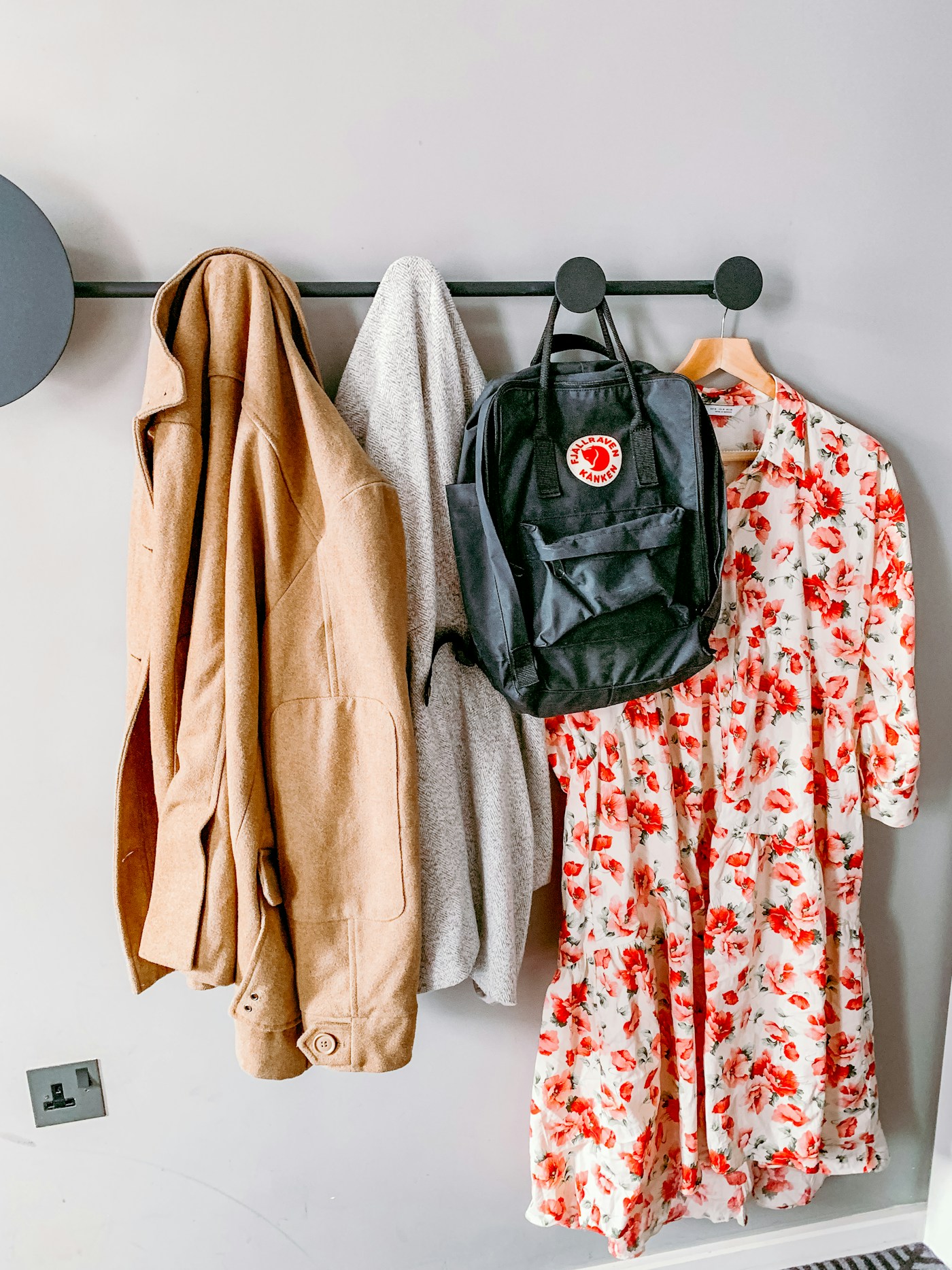
A dedicated wall rail gives everyday bags and outerwear a place away from the floor. Photo by ++S O C I A L . C U T++ on ++Unsplash++. Illustrative image; the rail shown is not the linked Umbra product.
3. Let a small bench handle sitting and shoe storage
If you have a usable stretch of wall, a bench can solve two problems at once: somewhere to sit while changing shoes and somewhere to keep footwear off the main walkway.
An open bench with shelves underneath feels lighter than a tall storage unit. It also makes the shoes easy to reach. The trade-off is that everything remains visible, so this works best with a small everyday selection.
The ++SONGMICS three-tier bamboo shoe rack bench in Yellow Brown on Amazon (paid link)++ is listed at 27.6 inches wide and combines a seat with two shoe shelves. It is an option to measure against your space, rather than a reason to add a bench where one will not fit.
Before buying, check the complete dimensions, assembly requirements, stated load limit and shelf clearance. Tall boots may need a separate spot, and larger shoes can reduce the number of pairs that fit comfortably.
Keep most of the seat available for sitting. A cushion can soften the look, but a row of baskets or decorative objects on top removes the main benefit.
No room for a bench? keep the entrance clear and use a chair elsewhere in the room when you need to change shoes. The storage solution does not have to include seating.
4. Use a practical mat to define the entrance
A mat creates a small visual boundary between “just arrived” and the rest of the living room. It can also give people an obvious place to pause before stepping farther inside.
Choose it for the conditions at your door. A sheltered apartment entrance and a front door exposed to wet weather have different needs. Check the intended indoor or outdoor use, cleaning instructions and compatibility with your flooring.
The ++GORILLA GRIP WeatherMAX 29-by-17-inch door mat in Gray Diamond on Amazon (paid link)++ is one compact indoor/outdoor option. Measure your doorway first and check that its thickness works with the clearance beneath your door.
Test the door opening over the actual mat, including any additional backing you use. Avoid curled edges, slipping or a mat that catches every time the door moves.
For the decorating side, take a color from the living room rather than introducing an entirely different palette. A simple neutral pattern can mark the entrance while still feeling connected to the rest of the home.
5. Limit the shoe zone to the pairs you use now
A small entrance becomes much easier to organize when it does not have to hold every shoe in the house. Give the space a daily limit and store the remaining pairs in a closet, bedroom or other suitable location.
For example, a two-person household might start with two everyday pairs per person and see whether that is enough. Adjust it to your routine rather than treating a storage label’s maximum capacity as a target.
If you do not have shelves, a washable tray can contain the daily shoes. Position it where it will not obstruct the route through the room. A basket can look softer, but check whether damp or dirty footwear will damage it or make cleaning awkward.
For a cleaner look, choose one container that fits the available spot instead of several little baskets scattered around the doorway. A shallow box in an existing cabinet may be enough for slippers or lighter shoes.
A useful habit: when the allocated space is full, move an unused pair back to its main storage place. Adding another basket usually postpones the same problem.
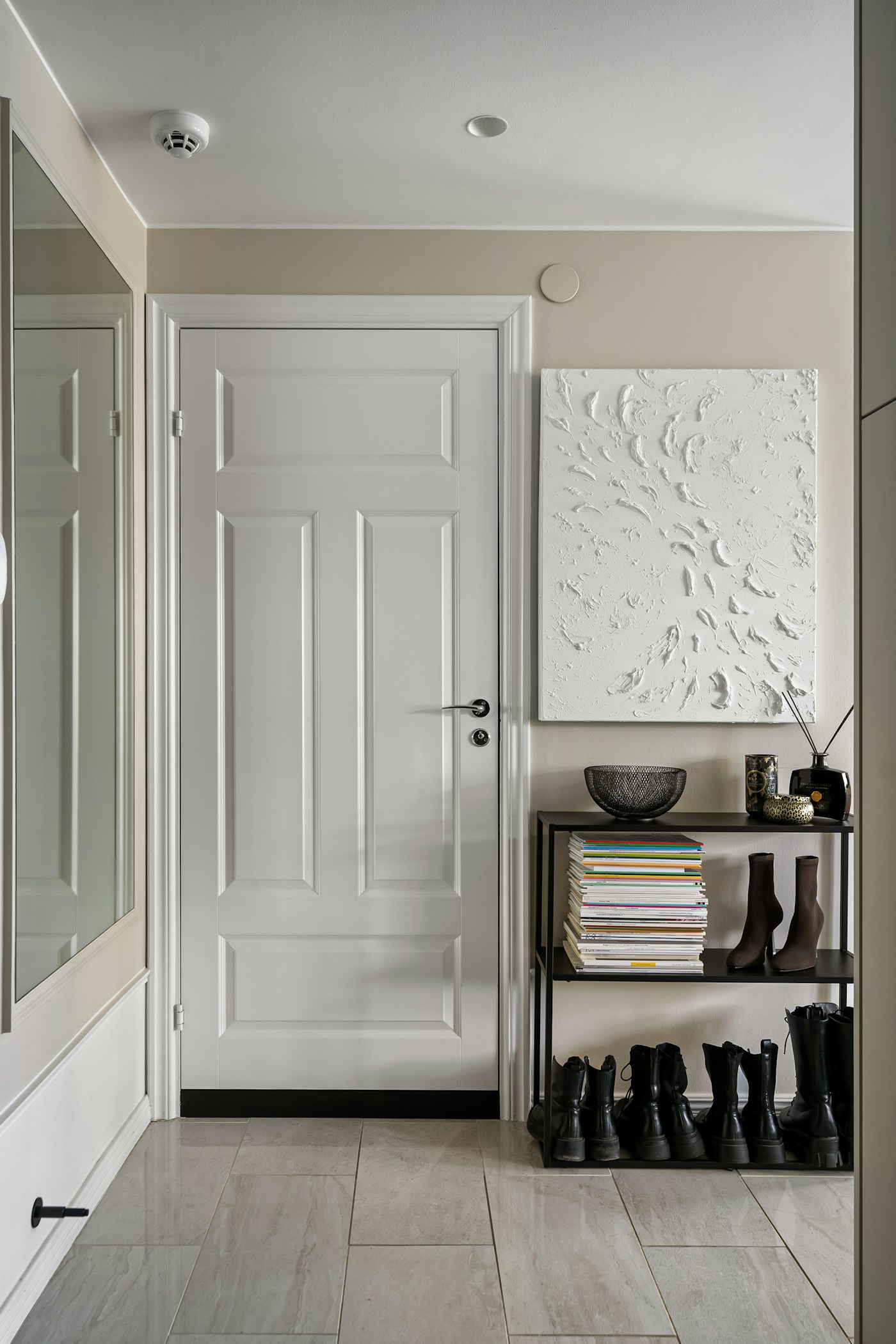
A slim shelving unit brings a landing surface and everyday shoe storage together in one spot. Photo by ++Lisa Anna++ on ++Unsplash++.
6. Use a mirror to finish the arrangement
A mirror gives an entrance a clear focal point and a convenient place for a final check before leaving. Above a bench or small landing surface, it can help a simple arrangement feel like part of the room.
Look at what the mirror will reflect before choosing its position. A view toward a window or an uncluttered part of the room is usually more appealing than a direct reflection of shoe piles and bags.
A round mirror can soften a group of straight-edged furniture and hooks. A narrow rectangular mirror may suit a slender wall better. The right shape is the one that leaves the entrance feeling comfortable rather than crowded.
Mount it securely with hardware suitable for its weight and your wall. If you cannot add a mirror, a small piece of artwork can provide the visual anchor; the storage will still work.
Repeat one finish from the room—such as warm wood or black metal—so the entryway feels connected to the living space beyond it.
7. Use the back of the sofa when there is no spare wall
Sometimes the only way to define an entrance is through the furniture arrangement. If the back of your sofa faces the front door, it can create a gentle boundary between arriving and sitting down.
You do not automatically need to add a console behind it. First see whether the sofa itself creates a clear route into the room. Moving it slightly may improve the entrance, but only if the rest of the living room remains comfortable.
If there is genuinely enough space, a shallow console behind the sofa can provide the landing surface missing from the walls. Check the combined footprint of the sofa, table and walking route before buying.
Keep the tabletop restrained: a key tray, a small lamp if there is a safely accessible outlet, and perhaps one personal object. Avoid trailing cords across the passage.
A solid divider or tall cabinet may make an already small room feel more enclosed. Try the lighter arrangement first and see whether it solves the everyday problem.
Three easy arrangements to start with
You do not need a complete entryway furniture set. Choose one of these small combinations and live with it before adding more.
- Almost no floor space: a tray on an existing nearby surface, a suitable row of wall hooks and a compact mat. Keep shoe storage elsewhere if necessary.
- A short usable wall: a small shoe bench with a mirror above it. Put bags on a separate hook only if they will not hang into the walkway.
- A door opening behind the sofa: use the sofa to define the route, then add a shallow landing surface only if the available space allows it.
If you are unsure, begin with the no-purchase version: clear one existing surface, give keys a bowl and move excess shoes elsewhere. That will show you what storage is still missing.
What to check before buying entryway furniture
- The full footprint: measure depth as well as width, including open drawers and flip-down fronts.
- The door in motion: allow room for the door, handle, hanging coats and someone carrying bags.
- How you will clean it: exposed shelves need tidying; enclosed storage still needs enough space for your footwear.
- Installation: check wall fixings, anchoring requirements and rental permissions before ordering.
- Whether you need it: furniture already in the room may solve the problem with a small change in how you use it.
The products linked above are examples selected for these layouts, not items we have personally tested. Check the current Amazon.com listing for the exact variation, dimensions and availability. Prices and delivery options can change.
Common mistakes that make a small entrance harder to use
Buying the furniture before measuring. A piece can look slim online while still taking up the space you need to enter the room. Mark out the footprint first.
Treating every empty hook as extra storage. Leave room for the coats and bags themselves. Too many hanging items can turn a clear wall into an obstacle.
Decorating away the useful surface. Leave space to put things down, and keep a bench usable as a seat.
Trying to create a complete hallway inside a living room. A small landing point can be enough. The entrance should support the room, not take it over.
Frequently asked questions
How do you create an entryway when the front door opens into the living room?
Give the area just inside the door a few clear functions: a place for keys, an appropriate spot for everyday bags and shoes, and an unobstructed route into the room. A tray, hooks and a mat may be enough; a table or bench is optional.
Can a small entryway work without a console table?
Yes. Use a shallow wall shelf or a tray on nearby furniture for small items. If floor space is tight, keep shoes elsewhere and focus on a simple landing point.
What is a good entryway arrangement for a rental?
Start with movable pieces and furniture you already have. A compact bench, suitable mat and key tray need no wall installation. Check your lease and product instructions before using drilled fixings or removable adhesive hooks.
Should the entryway match the living room?
It does not need to match every detail. Repeating a wood tone, metal finish or accent color helps it feel connected. Keep the entrance simpler than the main room so everyday belongings have space.
A welcoming entrance can be a very small one
The best small entryway is the one you can use without thinking: keys have a home, everyday shoes stay contained, and you can walk through the door comfortably.
Start with the item that causes the most frustration, solve that first, and add another piece only when it has a clear purpose. A few well-placed essentials will usually do more for the entrance than a crowded collection of organizers.
For another way to make a small part of your home work harder, explore our ++cozy reading nook ideas for small spaces++.
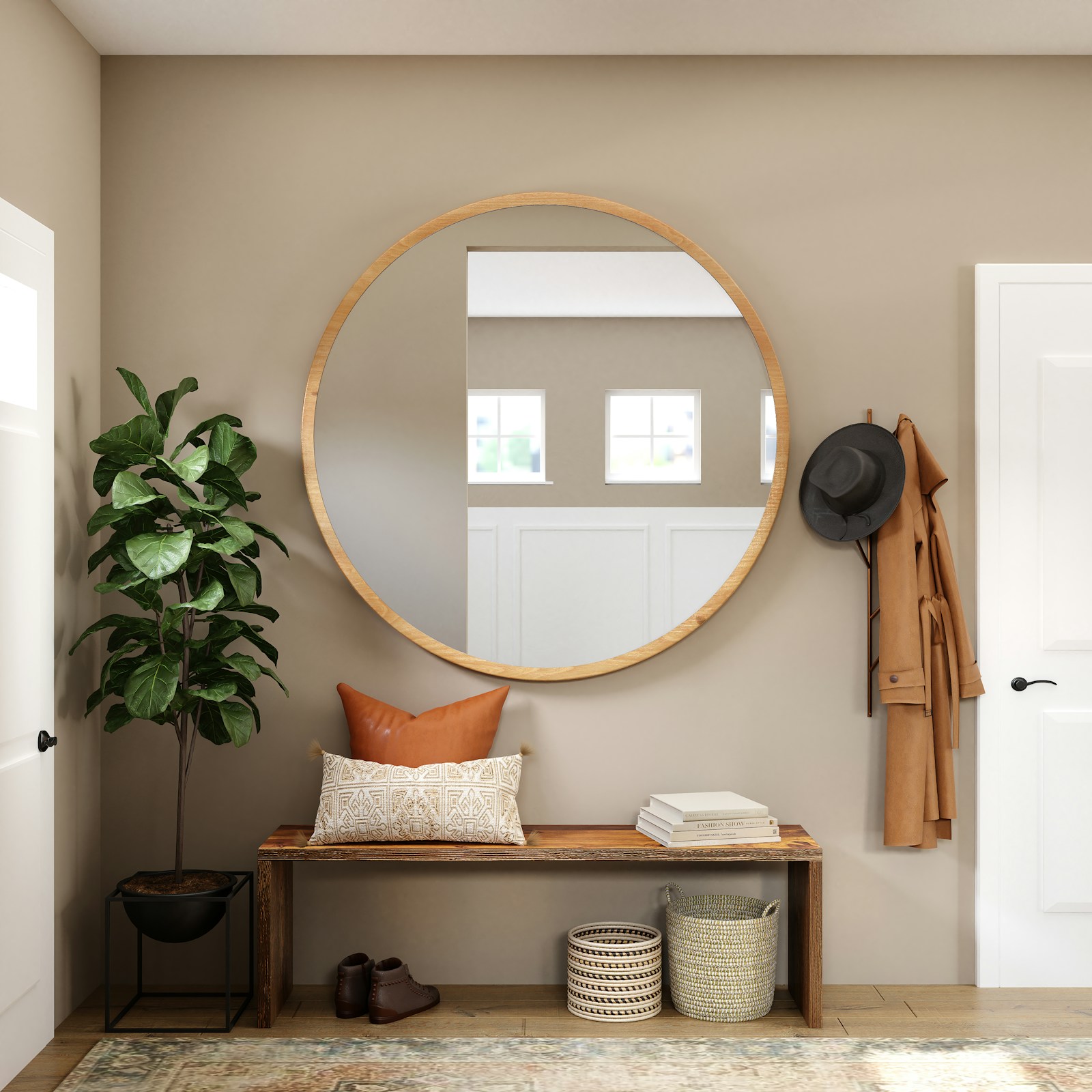
Featured image by ++Spacejoy++ on ++Unsplash++. The image illustrates an entryway arrangement; it does not depict the specific products linked in this article.